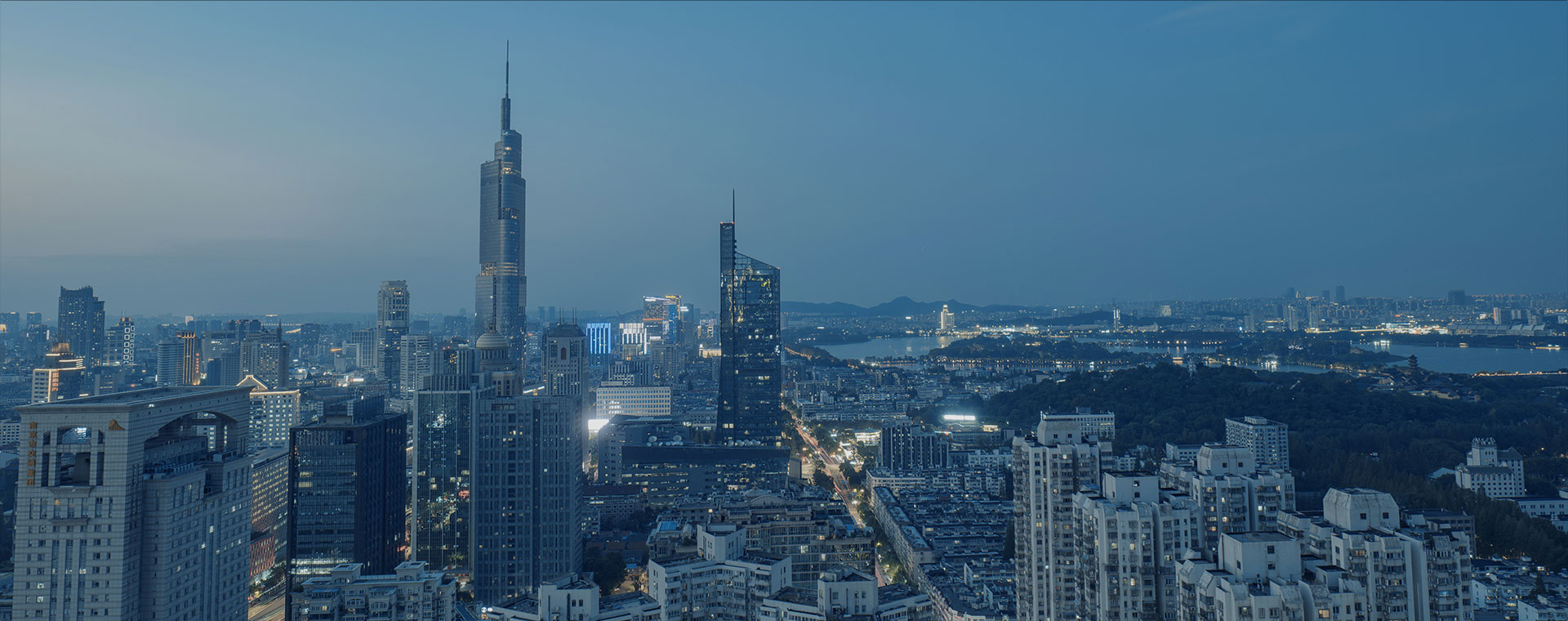
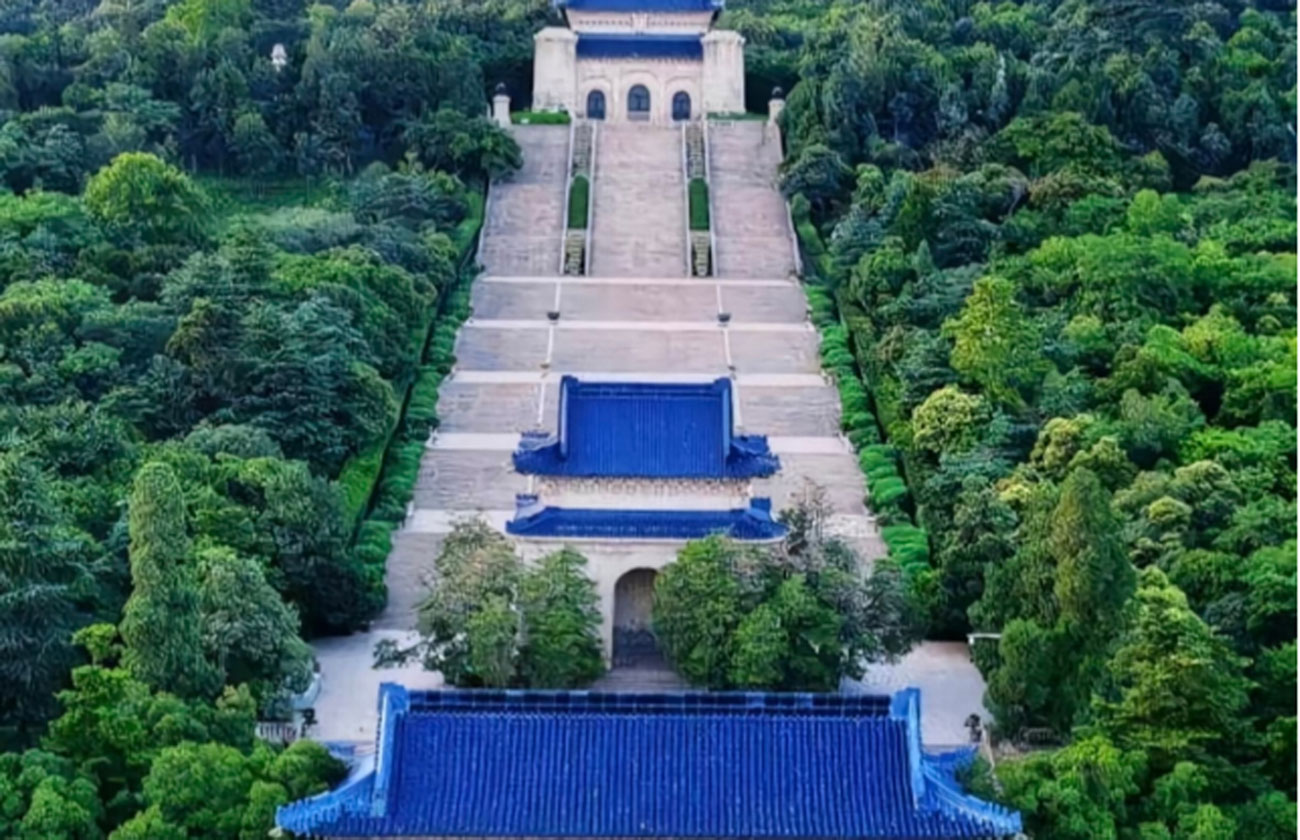
The resting place of Dr. Sun Yat-sen, father of modern China. A 392-step marble stairway climbs through pine and cypress forest to an iconic blue-glazed memorial hall — solemn, perfectly symmetrical, and crowned with sweeping views over Purple Mountain. Recommended visiting time: 1.5 hours.
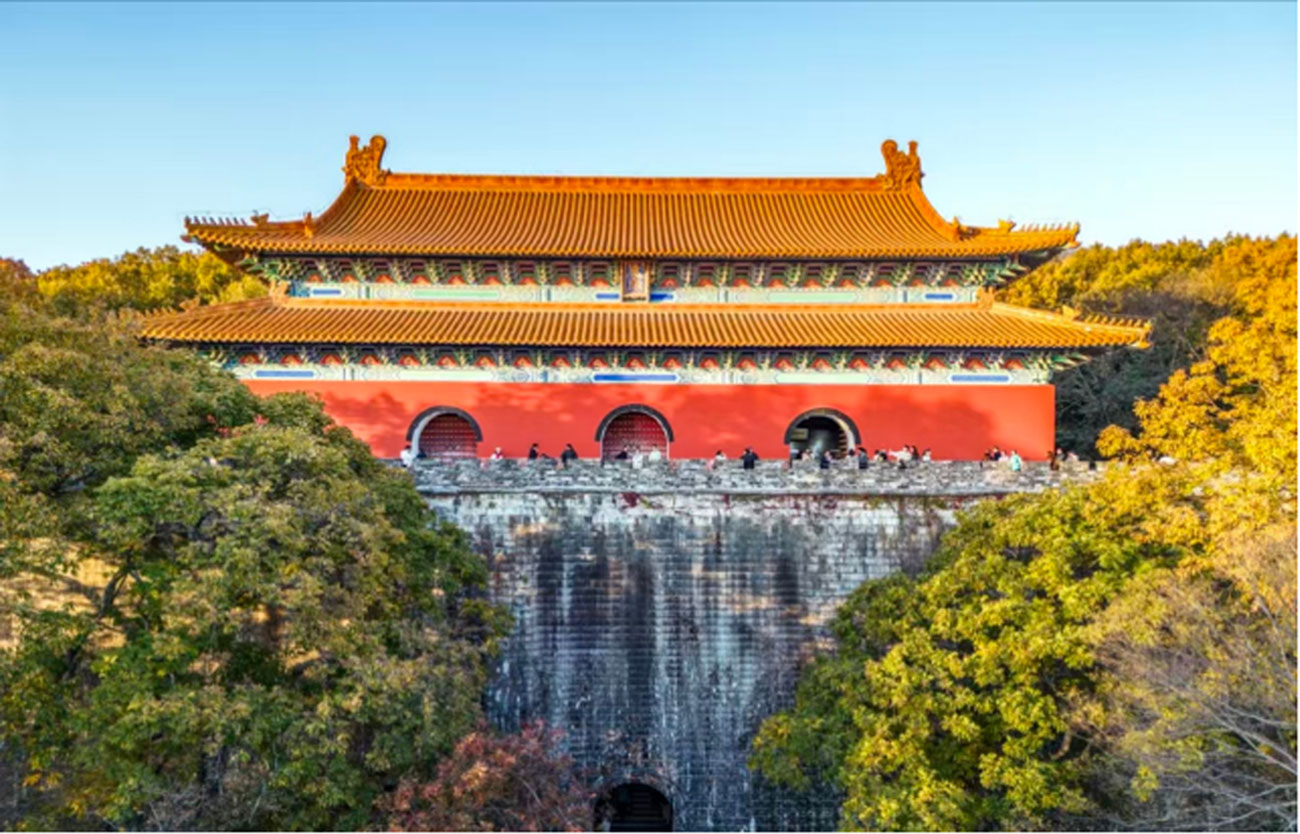
Ming Xiaoling is the joint mausoleum of Zhu Yuanzhang, the founding emperor of the Ming Dynasty, and Empress Ma. Construction began in 1381 and took 32 years to complete. Famous for the grand Sacred Way lined with stone statues, ancient pine trees and intact imperial tomb layout, it established the architectural norms for imperial mausoleums of the Ming and Qing dynasties. It was inscribed on the UNESCO World Heritage List in 2003.Recommended visiting time: 2-3 hours.
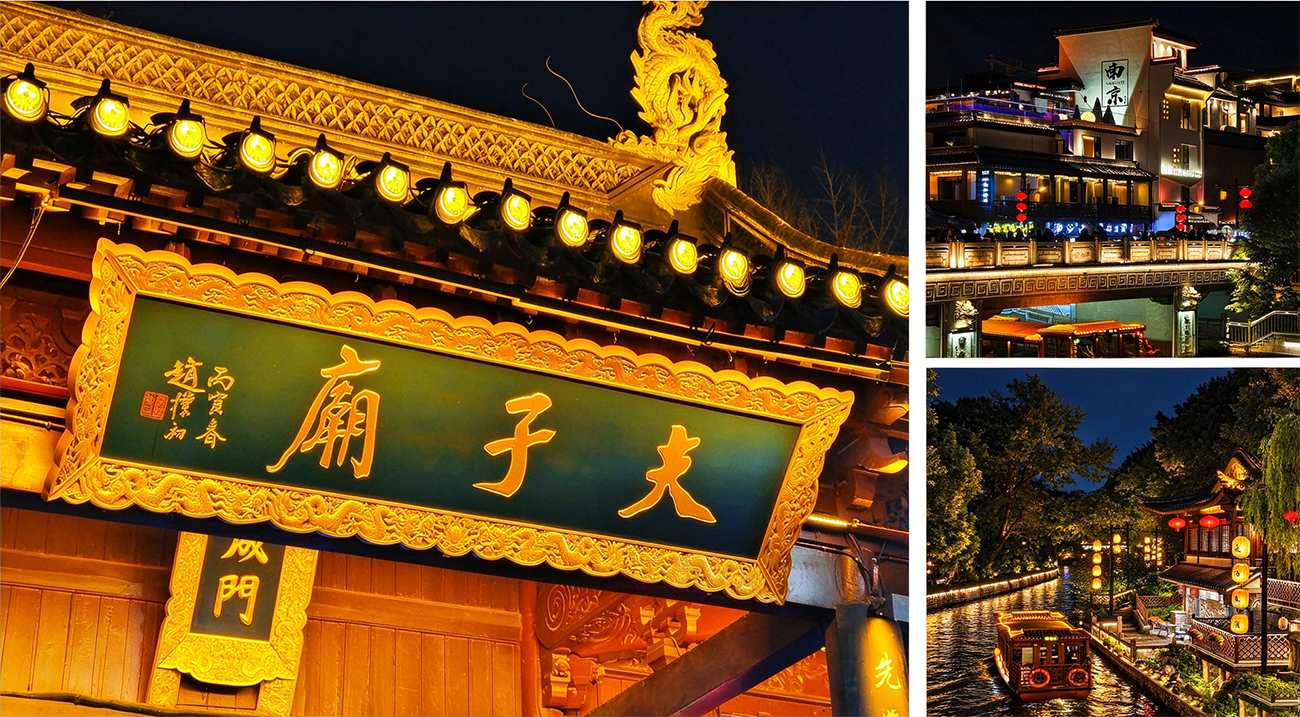
The historic soul of old Nanjing: lantern-lit riverside lanes, snack streets and a temple of Confucius first raised in 1017. Board a painted wooden boat after dark — the glowing banks are the city's classic evening experience. Recommended visiting time: 2 hours.
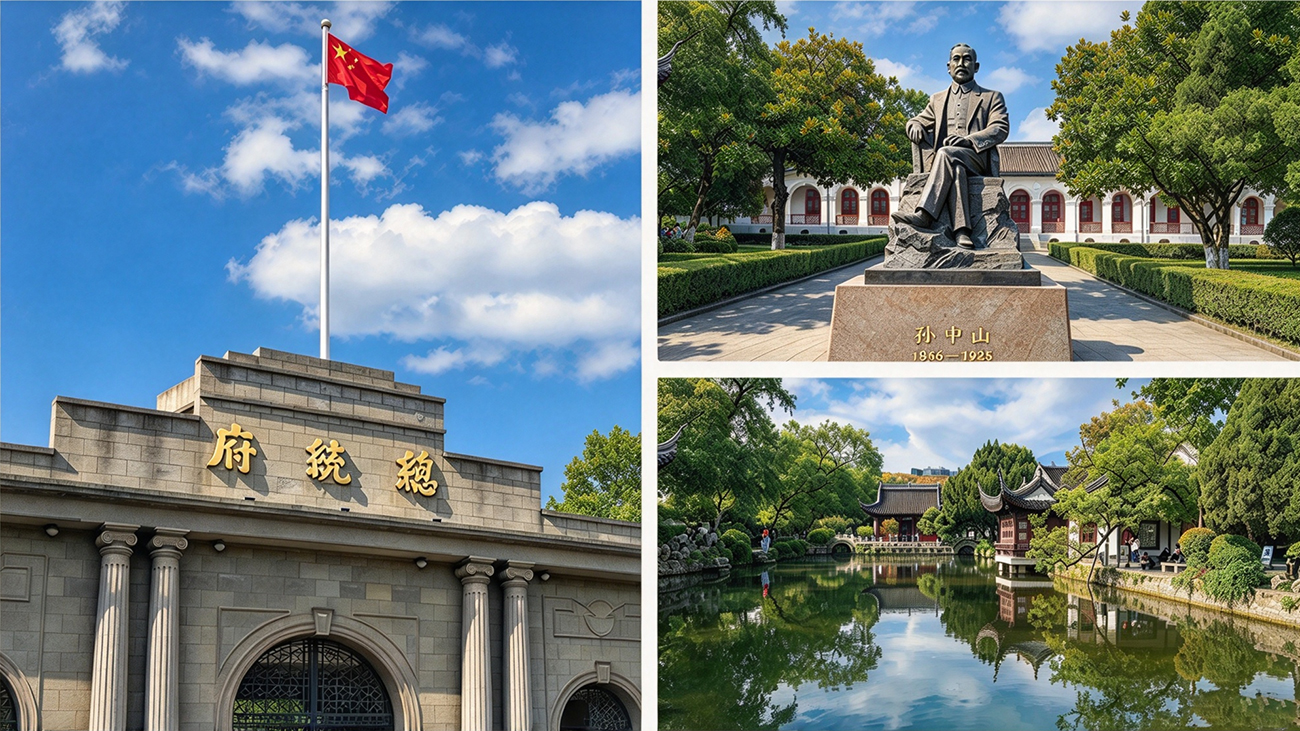
A living museum of modern China: Ming-era gardens, Taiping Heavenly Kingdom halls and the offices of the Republic of China government (1912–1949) stand side by side in one elegant walled compound. Recommended visiting time: 2 hours.
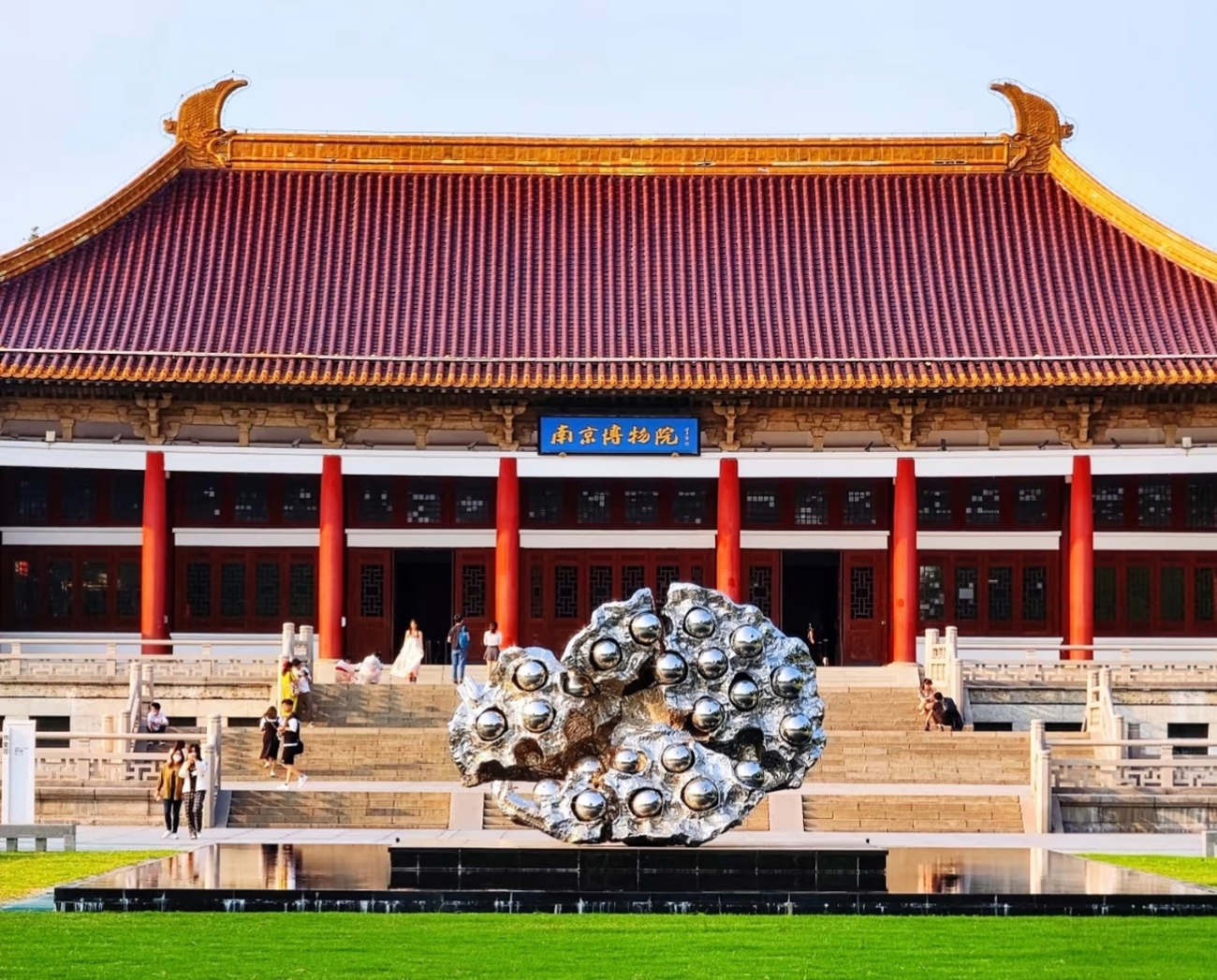
One of China's first and largest museums, holding more than 430,000 treasures — from 2,000-year-old jade burial suits to a full-scale recreated Republic-era street. The golden palace-style building is a landmark in its own right. Recommended visiting time: 2-3 hours.
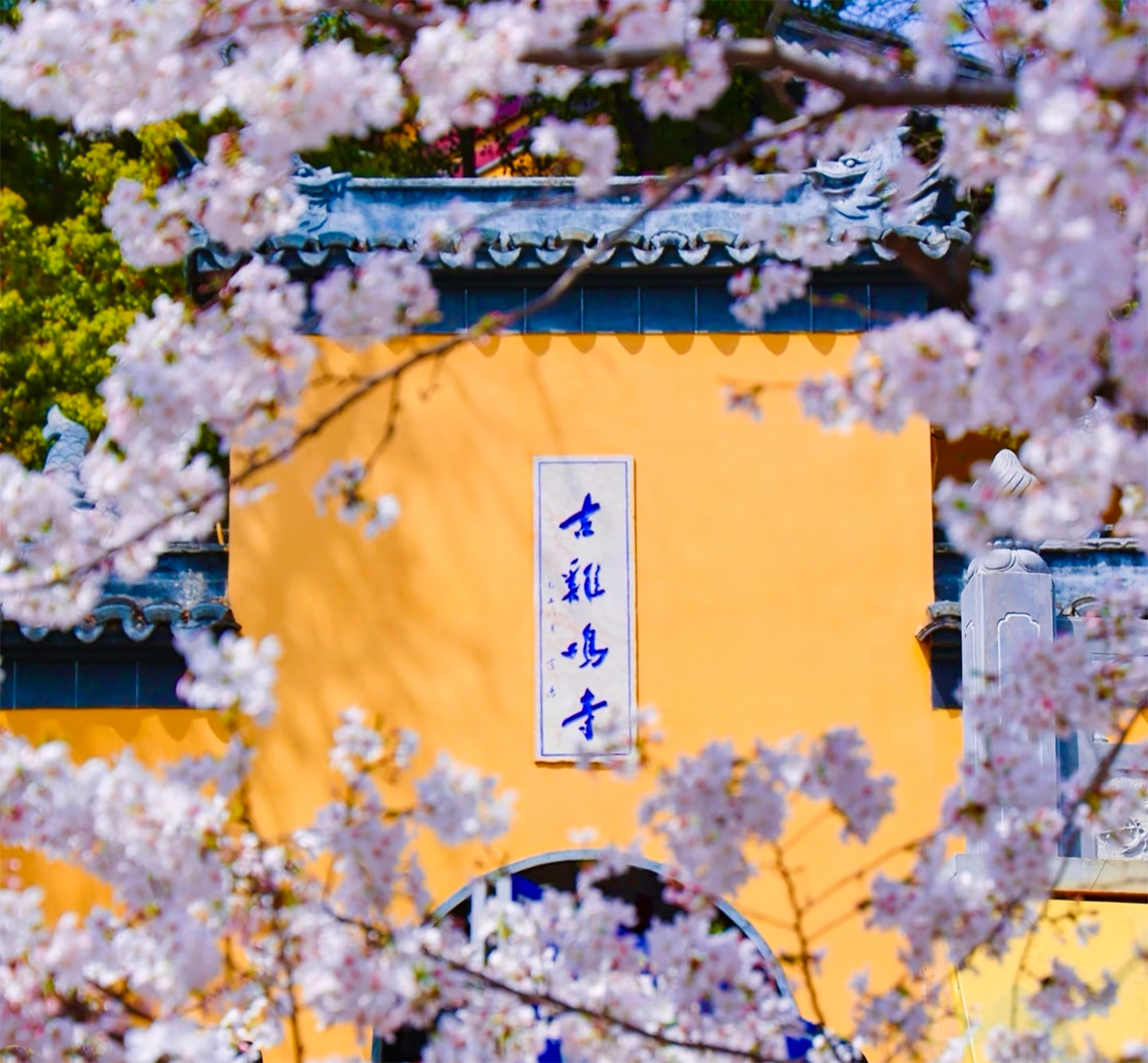
Jiming Temple is one of the oldest Buddhist temples in Nanjing, with a history of more than 1,700 years. Built against the hillside, the temple boasts a serene environment. It retains the layout of a traditional Buddhist monastery, where visitors can admire ancient halls, taste vegetarian food and experience the peaceful ambience of a Chinese Zen courtyard. Recommended visiting time: 1.5 hours.
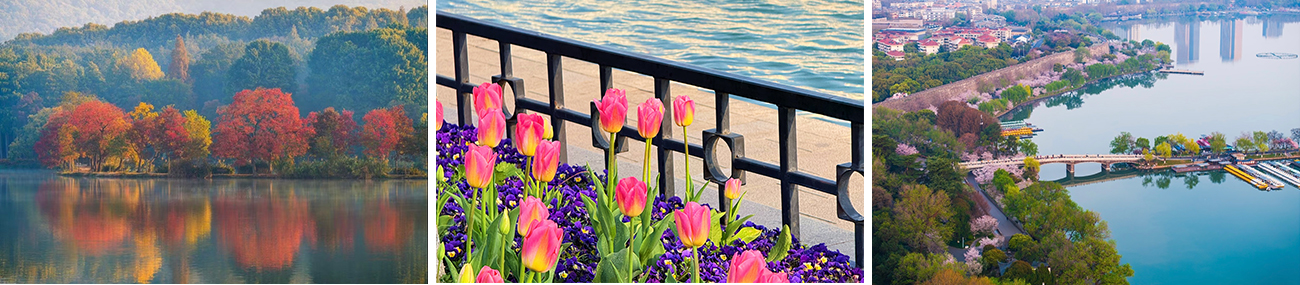
It is the largest urban imperial garden lake in the Jiangnan region, with five green oases scattered across the water. Boasting lush woods and tranquil lake views, visitors can stroll along the lakeshore or take a boat tour to admire the integrated scenery of mountains, waters and the city. Recommended visiting time: 1-2 hours.
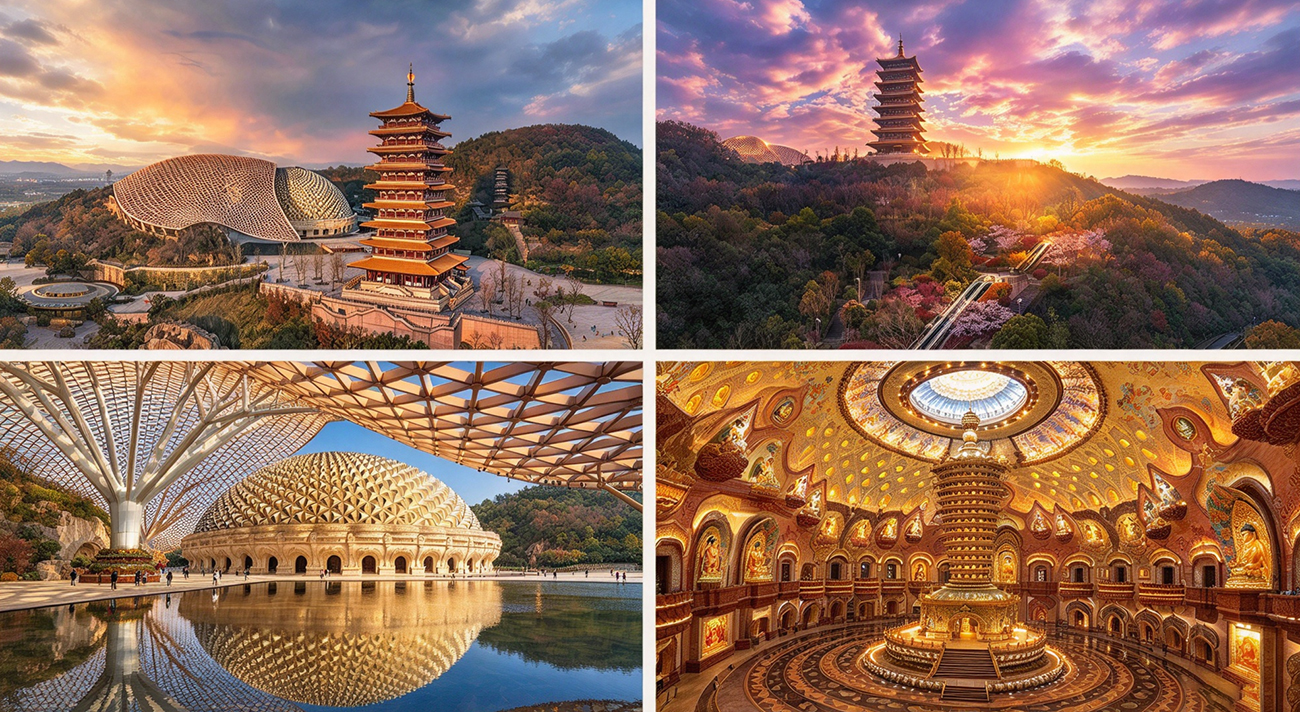
A breathtaking feat of contemporary Buddhist architecture: a colossal domed palace built into a former mine pit, sheltering a sacred relic of the Buddha. Its golden interior feels like stepping into another world. About 40 minutes from downtown; Recommended visiting time: 3 hours.
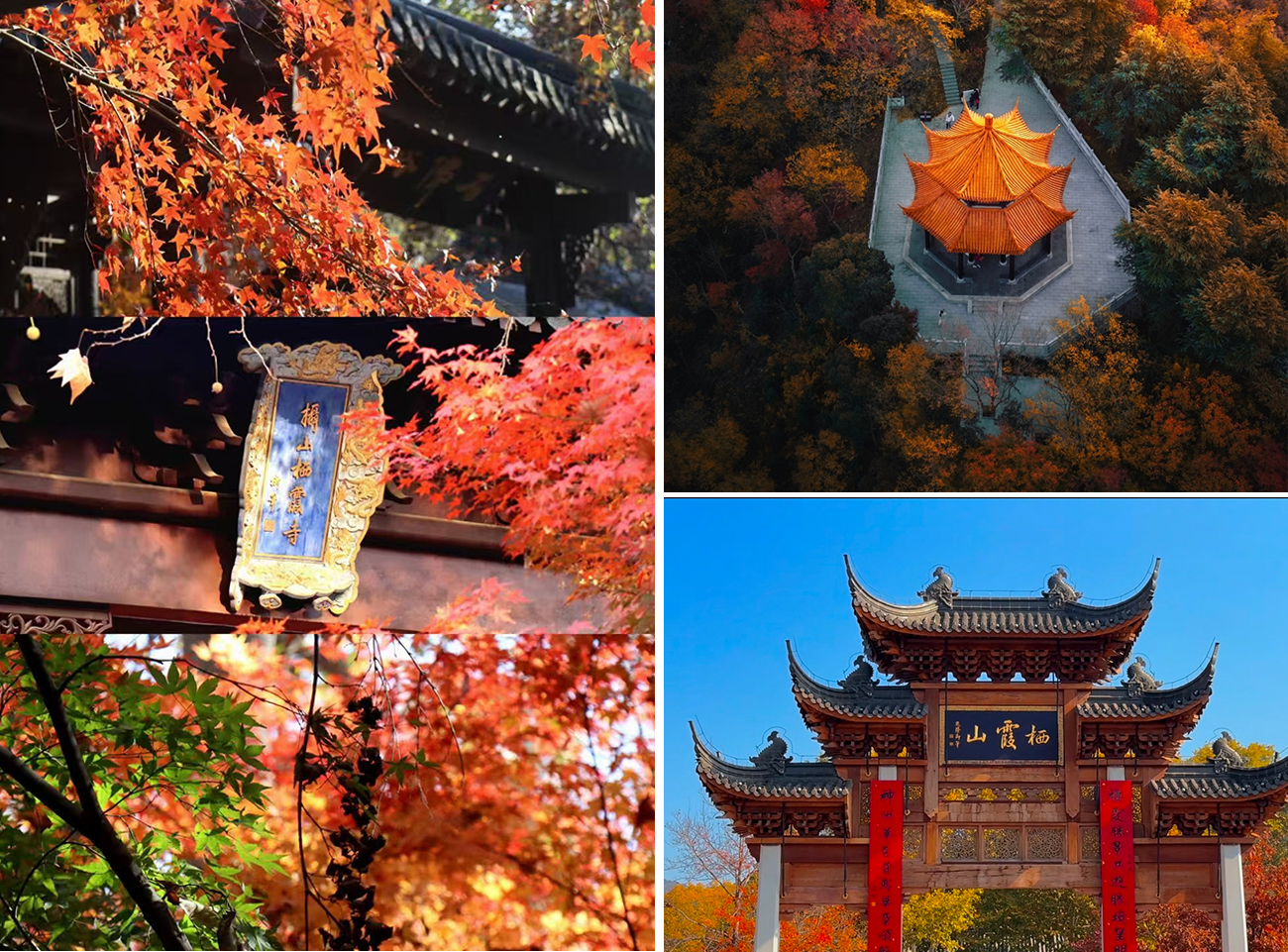
One of China's four great maple mountains, Qixia rises on the south bank of the Yangtze in north-east Nanjing. At its foot stands Qixia Temple, a 1,500-year-old cradle of Chinese Buddhism; behind it the hillside turns crimson in late autumn. Golden monastery walls, an ancient pagoda and flaming maples make this Nanjing's definitive autumn picture. Recommended visiting time: 4-5 hours.
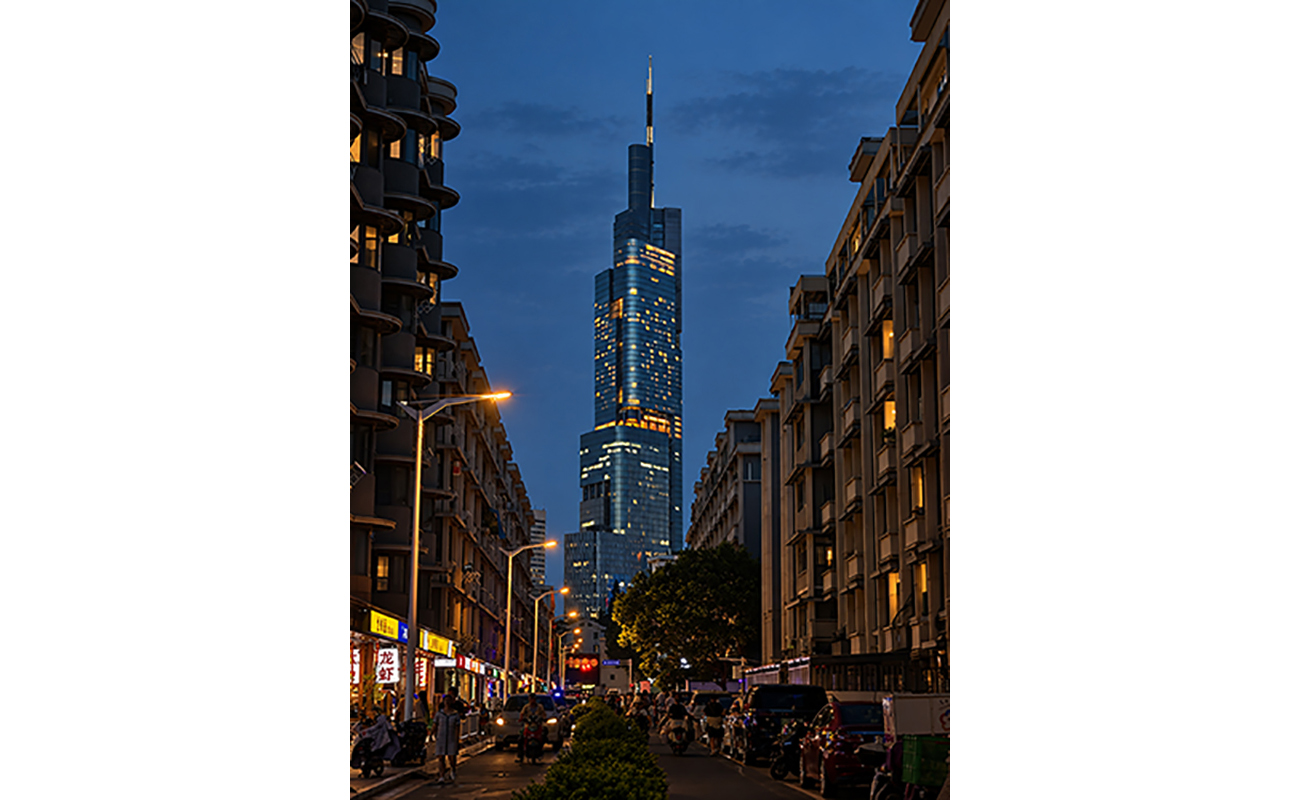
At 450 m, Zifeng Tower (Greenland Center) is the tallest building in Jiangsu and the city's defining landmark. Its observation deck on the 72nd floor, 288.6 m up, gives a 360-degree panorama reached by an 8 m/second elevator in 38 seconds — the fastest way to read Nanjing's geography in one look. Recommended visiting time: 45 minutes.
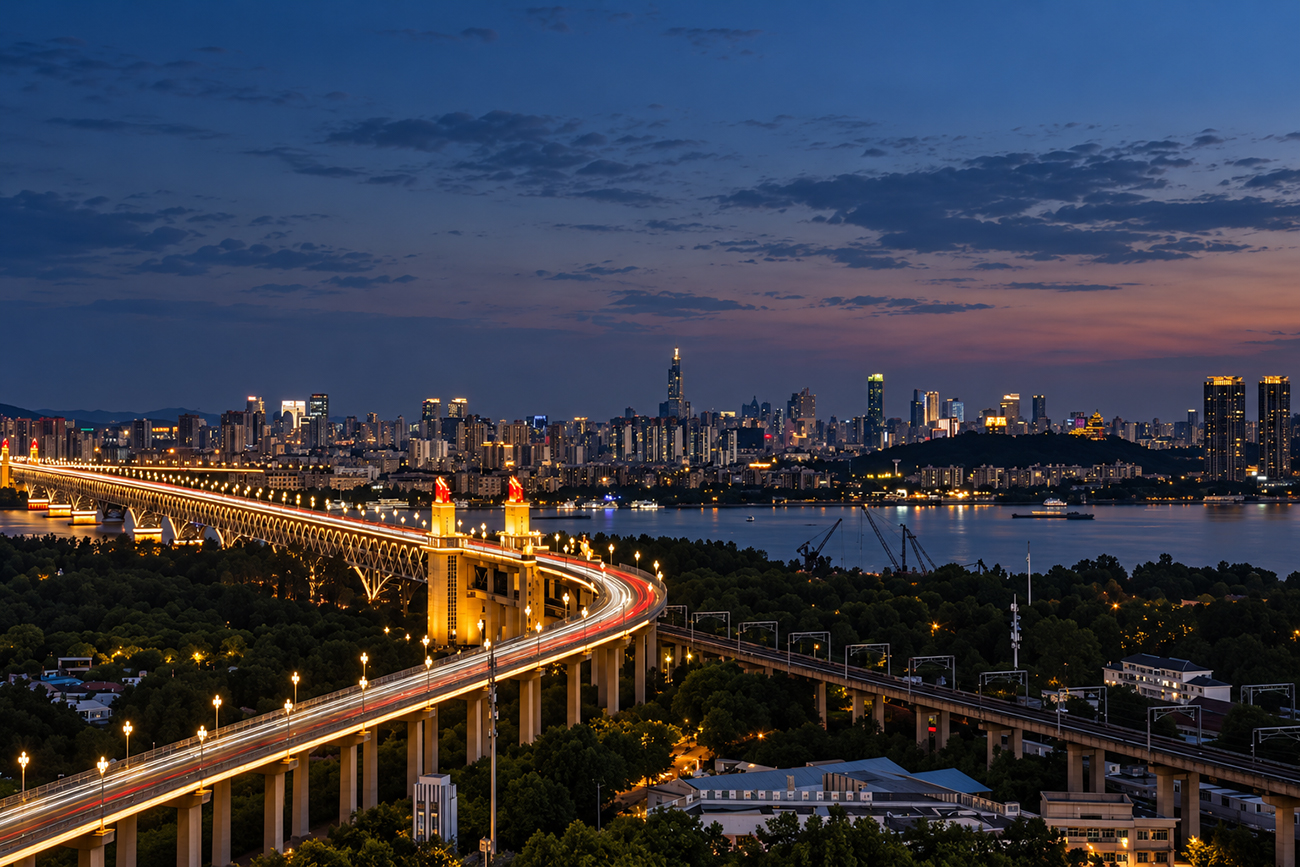
Opened in 1968, this was the first bridge over the Yangtze designed and built entirely by Chinese engineers . Its "Three Red Flags" bridgehead towers, jade-lantern lampposts and curving approach ramps make it one of the most photographed structures in China. Visitors can walk on the bridge deck, admire the grand river panorama and view the distinctive bridge sculptures.Recommended visiting time: 1-1.5 hours.
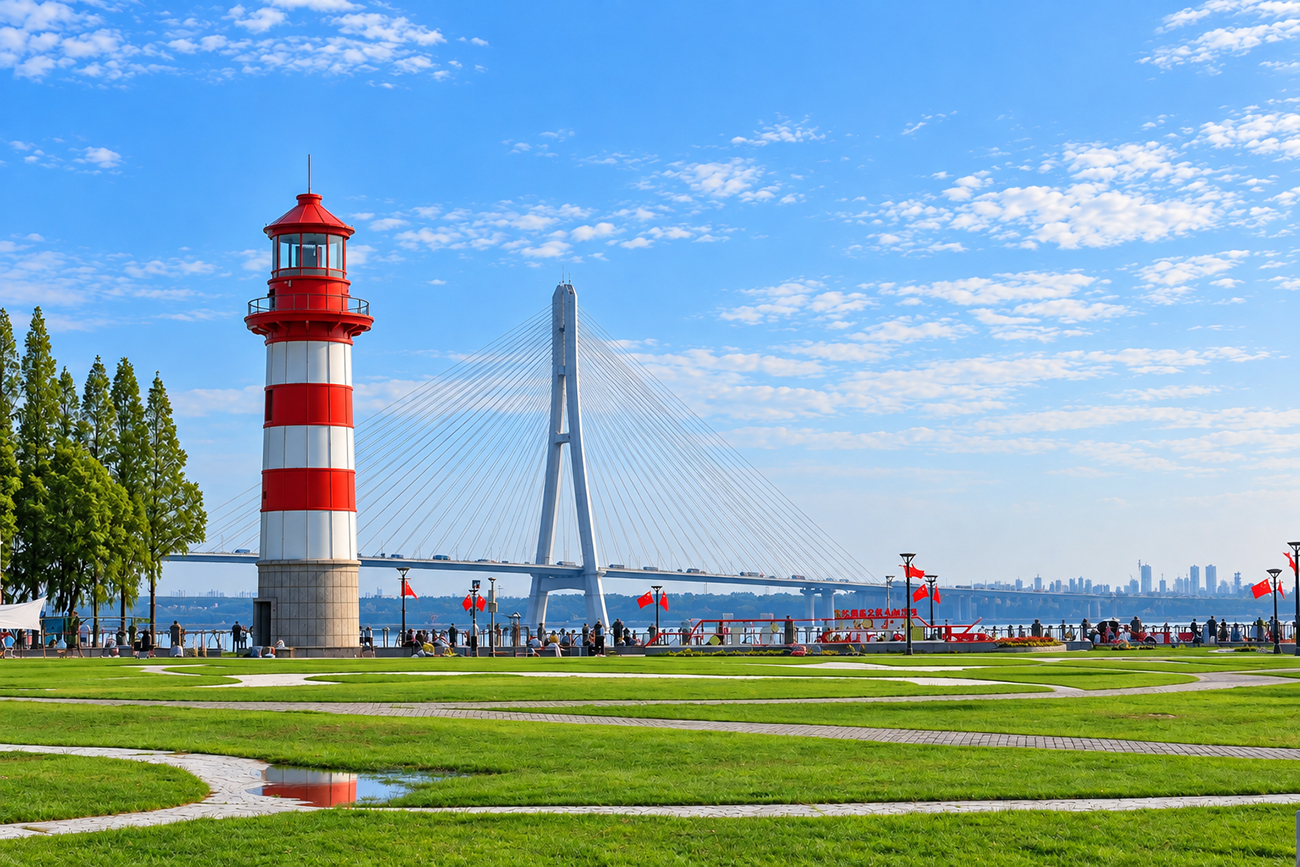
At the south-western tip of the city, where the Qinhuai New River meets the Yangtze, this riverside wetland is Nanjing's quiet, open horizon: reed beds, bird islands and a striking red-and-white lighthouse with the Third Nanjing Yangtze Bridge on the skyline. A favourite for sunset. Recommended visiting time: 1.5 hours.
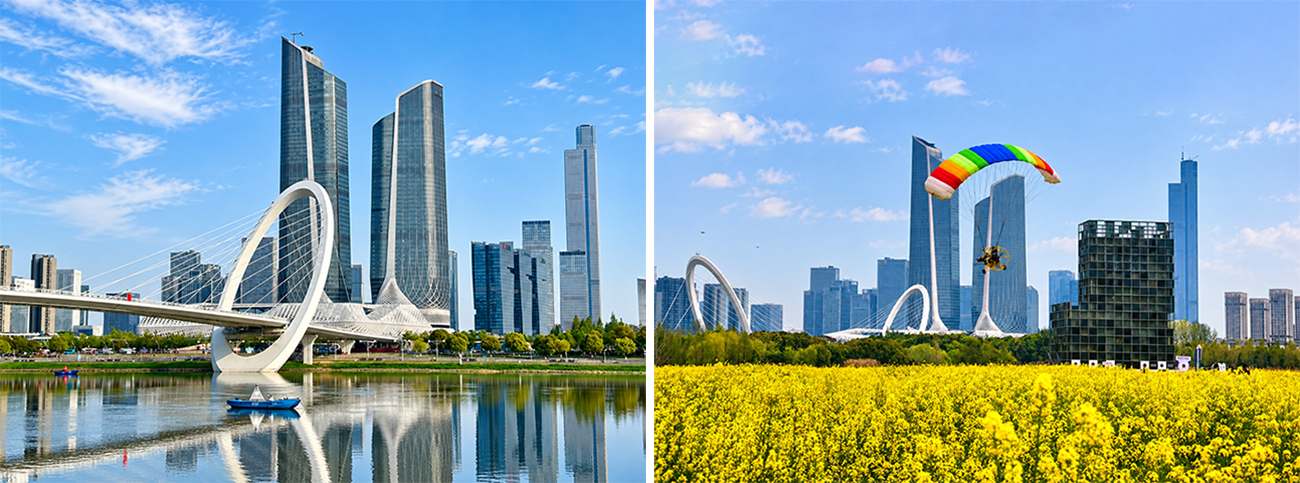
China's first cable-stayed pedestrian bridge, built for the 2014 Youth Olympic Games, spans the Qinhuai New River in Hexi New Town. Its white arcs and the neighbouring Youth Olympic Twin Towers glow after dark alongside the Zaha Hadid-designed performing arts centre, Nanjing's most contemporary skyline. Recommended visiting time: 1-1.5 hours.
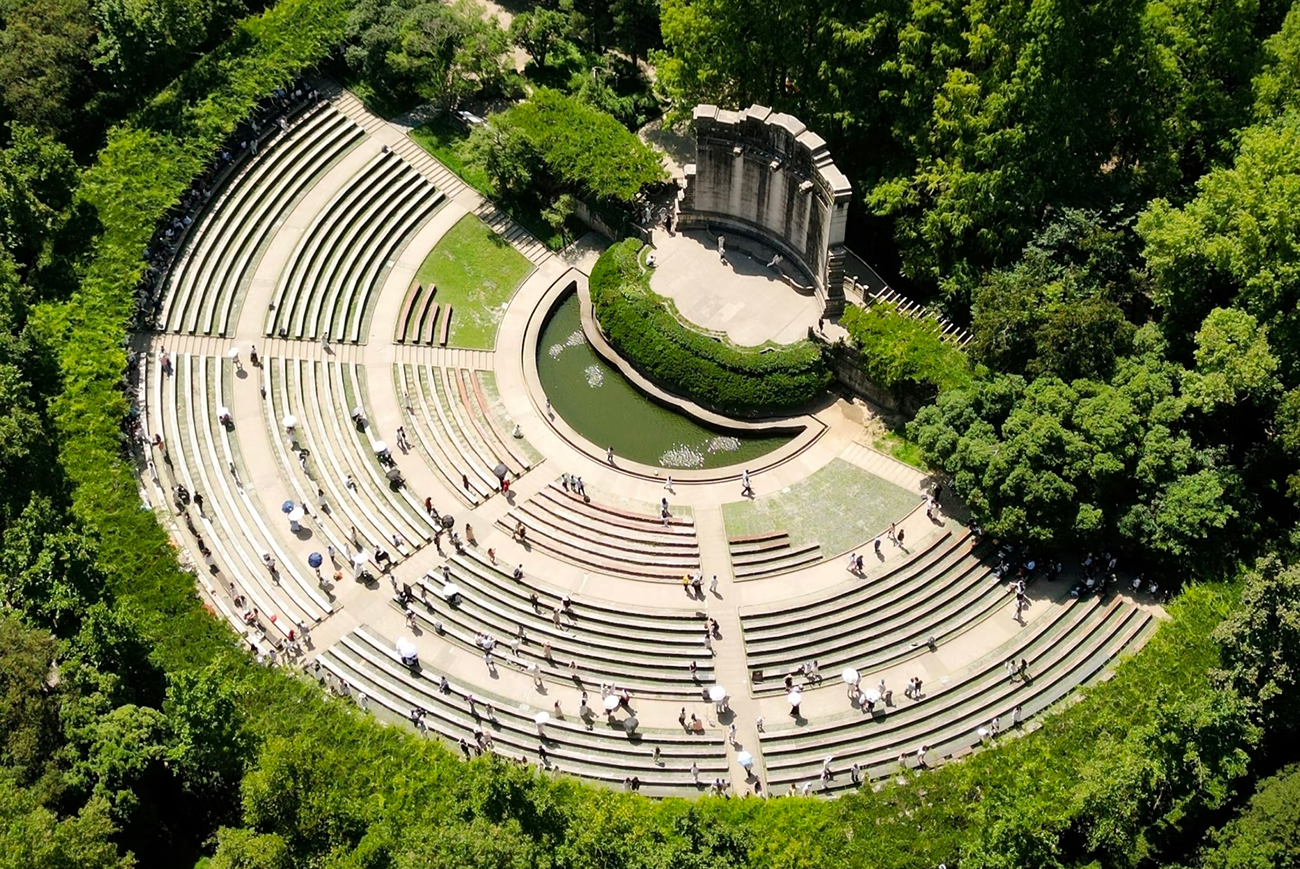
A graceful Republican-era structure inside the Zhongshan Scenic Area: a semicircular open-air auditorium ringed by a long colonnade, designed in 1932 as a setting for music and ceremony. Hundreds of white doves wheel over the lawn, and in early spring magnolia and later wisteria frame its cream-coloured arcade. Recommended visiting time: 30 minutes.
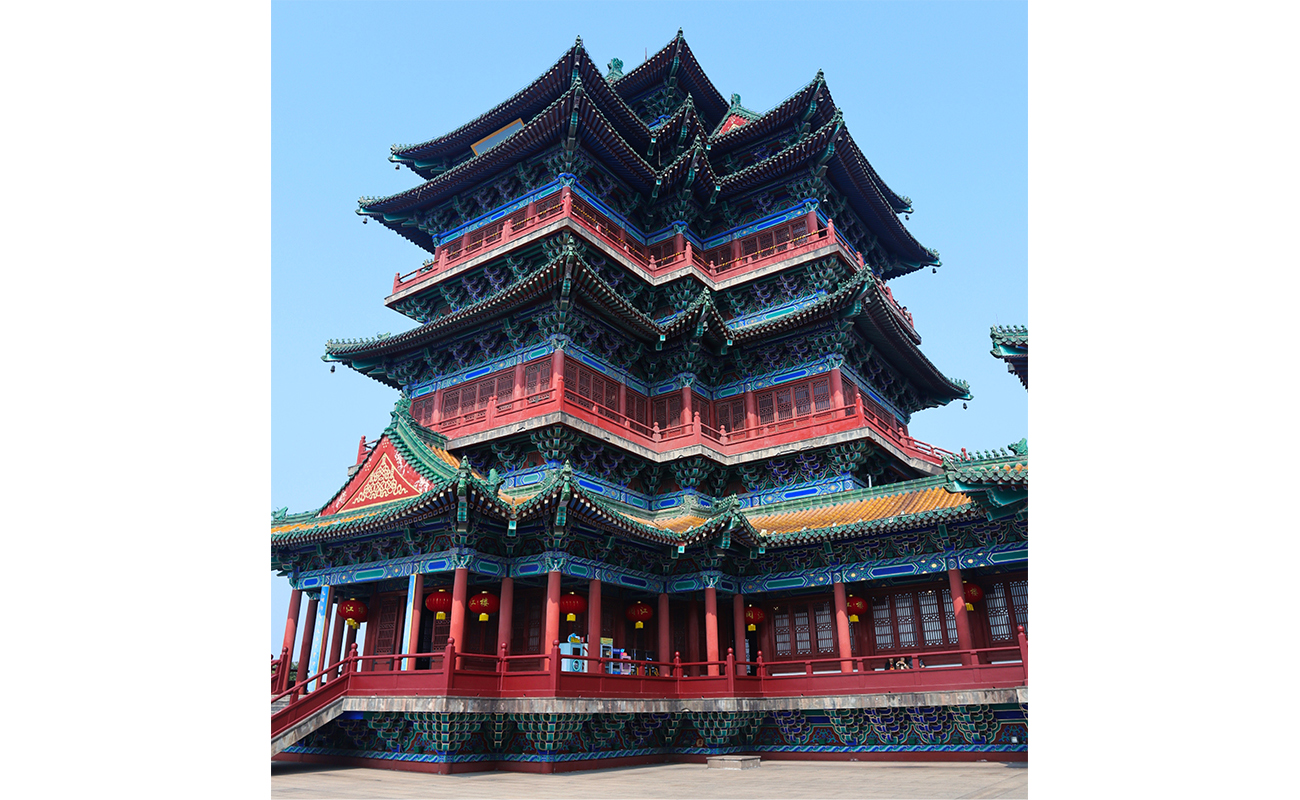
A Ming-style tower on Lion Hill (Shizishan) that was described in imperial writings for 600 years before it was finally built in 1999 — the classic case of "a tower with a famous essay but no tower". Its green-and-yellow glazed tiers rise above the Yangtze, and from the top you look down on the river and the Yangtze River Bridge. Recommended visiting time: 1.5 hours.
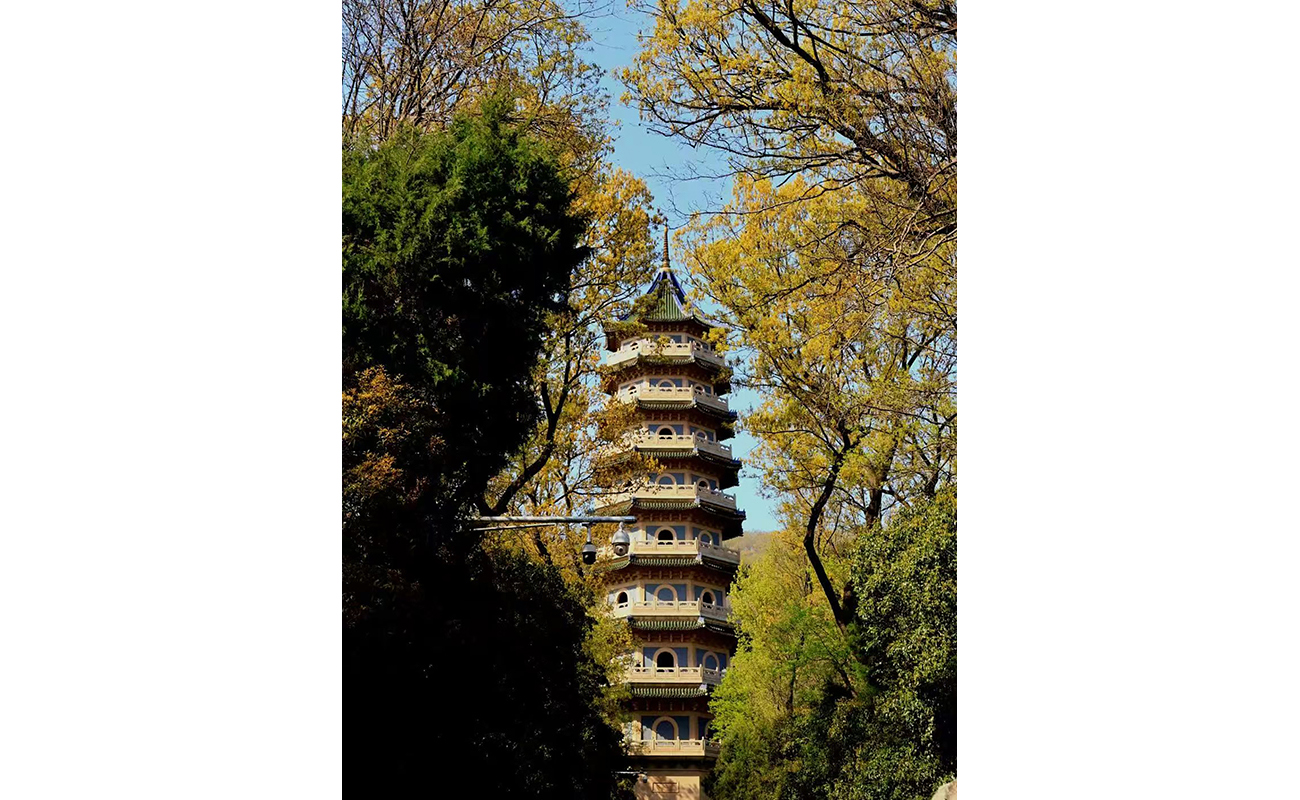
Deep in the pine woods of Purple Mountain, the Linggu quarter holds a 1,500-year-old monastery, a brick-vaulted Ming hall with no beams, and the nine-storey Linggu Pagoda raised in 1931 as a memorial to the fallen of the Northern Expedition. Climb it for a green sea of forest and the shape of the mountain. Recommended visiting time: 2 hours.
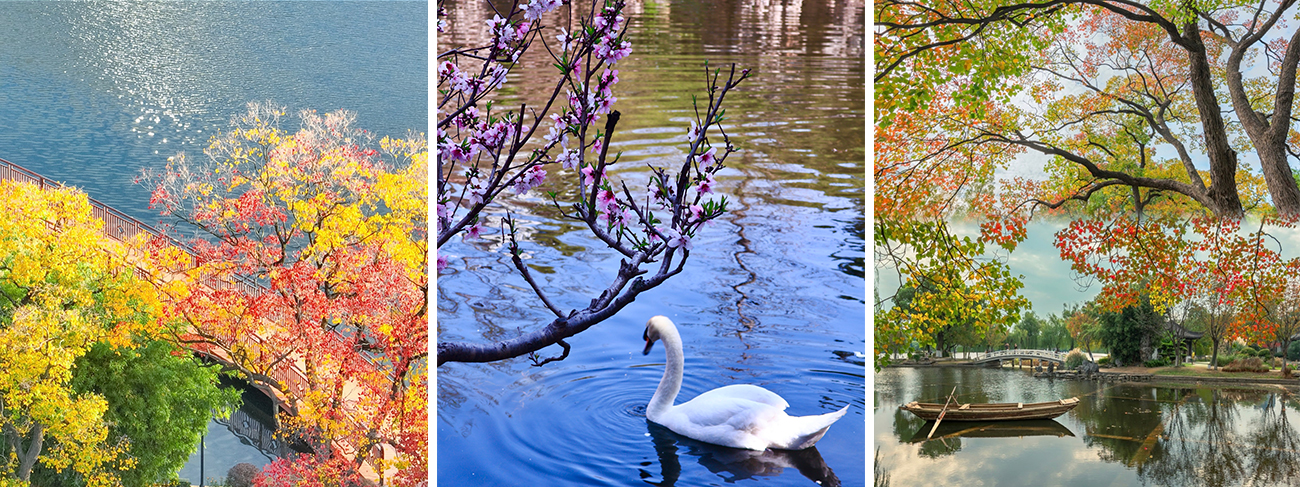
A classical Jiangnan garden with over 1,500 years of history, reputed as "The No.1 Lake in Jiangnan". It features pavilions, terraces and waterside corridors. Visitors can admire blooming flowers, peaceful lake scenery and well-preserved ancient buildings. Recommended visiting time: 1.5–2 hours.
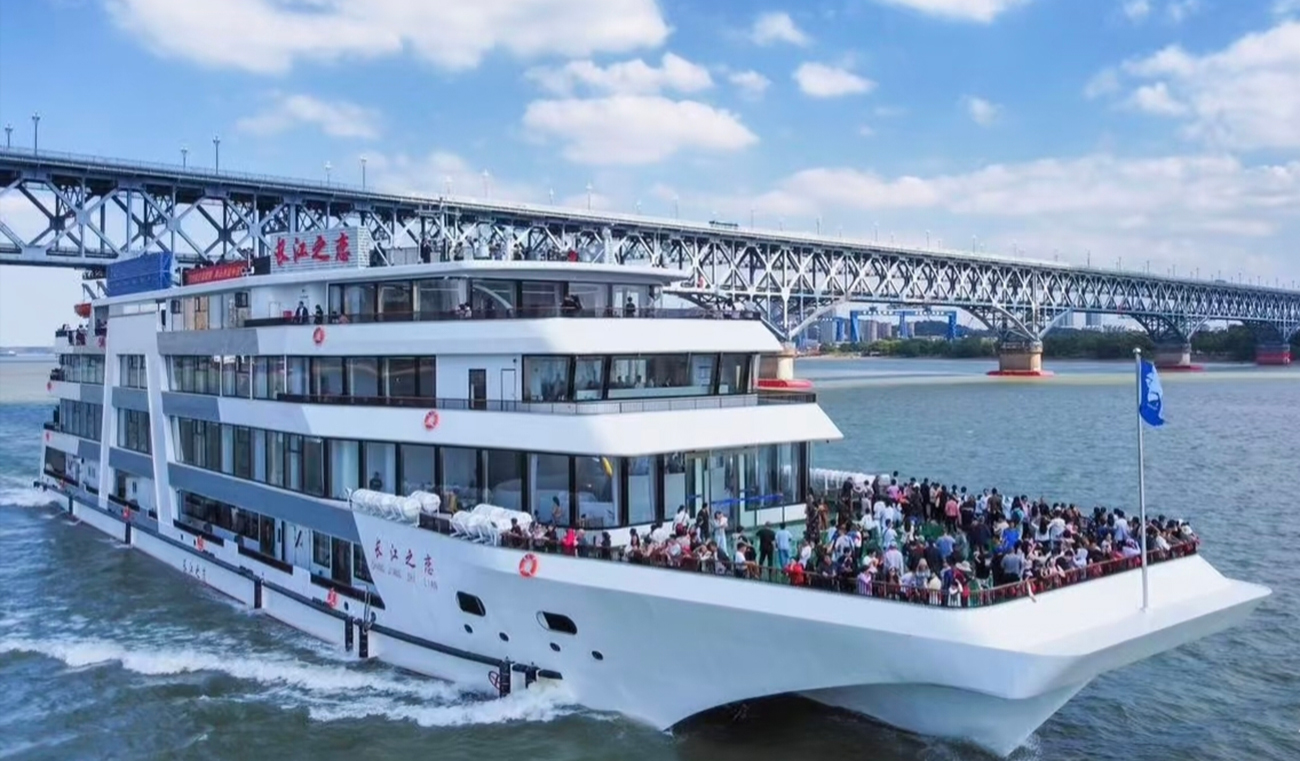
A two-hour river voyage that reads Nanjing from the water. The ship departs Wumadu Wharf, gliding past the Republican-era Zhongshan Pier, sails beneath the Nanjing Yangtze River Bridge and slides along the Mufu Mountain shoreline, where the Yangtze finless porpoise — the "smiling angel" of the river — still surfaces. On-board commentary covers the river's ecology, the port history of the waterfront and the porpoise conservation programme. Wildlife sightings cannot be guaranteed; the sunset can.